Meet AU: The Ten-Year-Old Bird Single-Handedly Bringing His Species Back From the Brink in Britain
A single ten-year-old male Montagu's Harrier named AU has fathered six chicks across two nests this summer, marking a second consecutive year of breeding success for Britain's rarest bird of prey
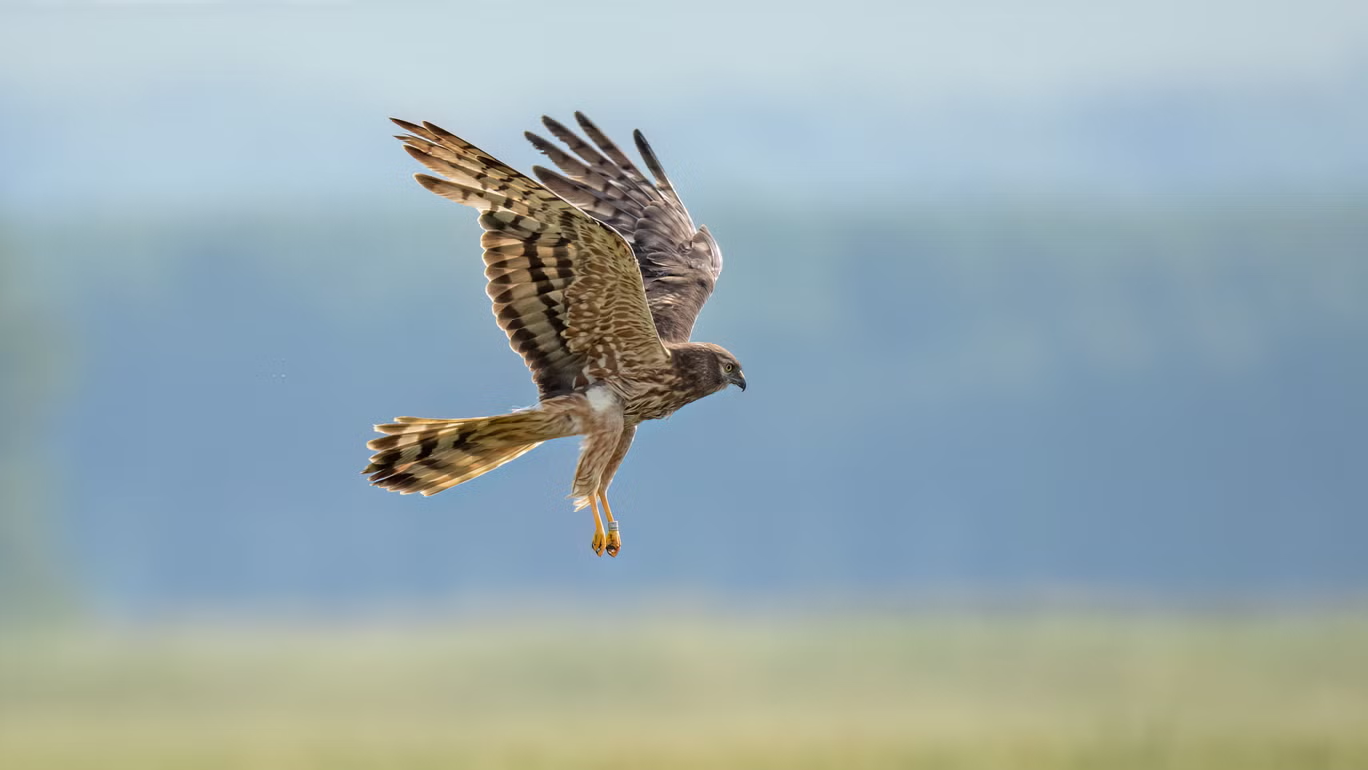
Image Source : Independent.co.uk
One bird, two nests, six chicks — and a species that nearly vanished from Britain entirely.
The Montagu's Harrier, the UK's rarest breeding bird of prey, has successfully raised chicks for a second consecutive year at a closely guarded farmland location in England, the RSPB announced in a press release Monday. Six young harriers fledged this summer, all raised by a single ten-year-old male known by his leg-ring identifier, "AU."
What makes this year's success particularly remarkable is how it happened. AU, who raised four chicks at the same site last year, returned this spring and attracted not one but two new females, nesting just a short distance apart. He ended up feeding three chicks in each nest simultaneously — described by RSPB's Montagu's Harrier species lead, Mark Thomas, in blunt admiration: "He is truly awesome."
The broader context makes AU's contribution even more significant. Montagu's Harriers — sometimes nicknamed the "aristocrats of the bird world" for their elegant, buoyant flight style — peaked at around 30 breeding pairs across Britain in the mid-1950s before crashing to zero by 1974. Numbers recovered modestly to around 13 pairs by the late 2000s, hit nine successful nests in 2011, and then collapsed again. Between 2020 and 2024, there wasn't a single successful UK breeding attempt, and the species was formally added to the UK's Red List of most at-risk birds in 2021.
AU alone has now fathered at least 16 chicks in Britain since 2018, according to RSPB records — making him arguably the single most important individual bird for this species' survival in the country right now.
Protecting that fragile progress took real effort. RSPB fieldworkers, working in partnership with the farmers hosting the nests, installed fencing around both sites to keep out ground predators, and all six chicks were fitted with unique identifying rings in mid-July. In a UK first for the species, two of the young females were also fitted with lightweight satellite tracking tags — devices costing roughly £3,000 each — that will let conservationists follow their extraordinary 7,000-mile migration back to West Africa for the winter.
The RSPB is now asking birdwatchers across the country to keep an eye out for the young harriers as they begin dispersing and eventually migrate, and to report any sightings via a dedicated hotline (montys@rspb.org.uk).
The location of the nesting site remains deliberately undisclosed — a precaution the RSPB says is essential given the species' history of habitat loss and continued vulnerability to disturbance and persecution in Britain. For now, though, conservationists are treating this as exactly the kind of quietly hopeful story rare-species recovery rarely gets: proof that sustained, careful, unglamorous work — fencing, ringing, tagging, secrecy — is starting to pay off, one bird at a time.
Got a tip or breaking story for us? Reach out at tips@kanilprwire.com.