California Approves Toughest Wildfire Landscaping Rules in the Country
New "Zone 0" rules require homeowners in high fire-risk areas to clear flammable material from the first five feet around their homes — sparking pushback even as fire experts call it a proven lifesaver.
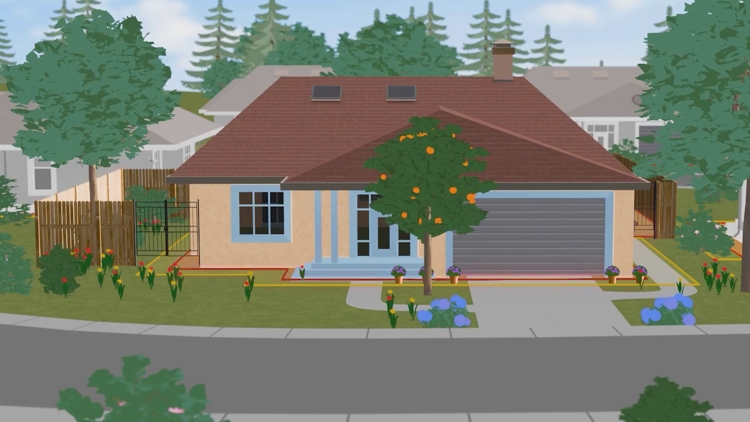
Image Credit : ABC10
Your backyard just became part of California's wildfire strategy.
The state's Board of Forestry and Fire Protection gave final approval this week to what officials are calling "Zone 0" — a set of rules that will require homeowners in fire-prone areas to strip combustible material away from the first five feet surrounding their homes. It's the first regulation of its kind in the US, and it's already generating pushback from residents who've spent years landscaping right up against their foundations.
The logic behind Zone 0 isn't really about walls of flame reaching a house. Fire researchers have found homes usually don't catch fire because a wildfire physically reaches them — they catch because wind carries burning embers ahead of the flame front, and those embers land on something flammable close to the structure. Mulch. Dry shrubs. A wood fence touching the siding. That's often all it takes.
So the new rules split that five-foot buffer into two zones. Right against the house, homeowners will need a completely non-combustible strip — no mulch, no wood chips, nothing that catches easily. Move slightly farther out, and the rules ease up a bit, allowing low-combustibility landscaping rather than a bare strip.
Fences and gates get specific treatment too. Any wooden fence attaching to or coming within a foot of a house needs a five-foot non-combustible section right at the connection point, since a fence line can act like a fuse straight to a structure. Trees near the house aren't exempt either — dead branches have to go, and larger trees need their lower branches cleared to reduce what fire crews call "ladder fuels," the kind of vegetation that lets fire climb from ground level into a canopy.
None of this is happening in a vacuum. The rules build on legislation first signed back in 2020, but the push to actually finalize and enforce them accelerated hard after the devastating Los Angeles fires of January 2025, which reignited scrutiny over just how vulnerable homes in California's highest fire-severity zones really are.
Timing-wise, new construction has technically already been subject to similar standards since 2025. What's changing now is that existing homes — the ones built years or decades before anyone drew a map of "Very High Fire Hazard Severity Zones" — are being pulled into the same requirements.
Not everyone's thrilled. Public pushback has been loud enough that even NPR flagged it directly, noting that plenty of homeowners see the rules as government overreach into decisions about their own landscaping, especially when compliance likely means real money spent on hardscaping, gravel, or professional consultation.
Fire officials, for their part, aren't backing off. Their argument is blunt: a five-foot strip of gravel around a house is a lot cheaper than losing that house entirely, and after watching entire neighborhoods burn in recent years, they're treating this as one of the more straightforward, evidence-backed fixes available.