Scientists Just Discovered a Real-Life "Dragon" — And Named It After a House of the Dragon Character
Researchers in Thailand have identified a new mountain horned dragon lizard species, Acanthosaura syrax, named after House of the Dragon's Syrax for its matching yellow coloring, small size, and prolific egg-laying.
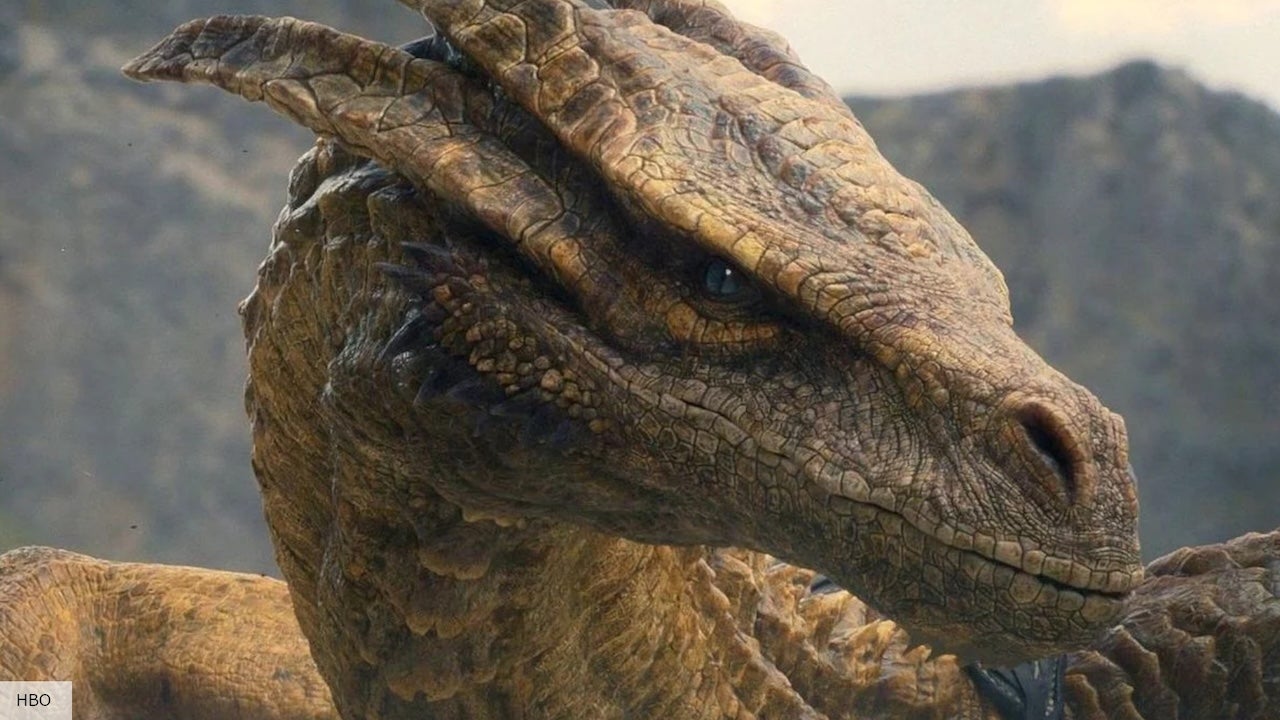
Deep in the mountain forests of western Thailand, researchers have found something that sounds like it wandered out of Westeros itself.
A team led by Poramad Trivalairat and colleagues from Chulabhorn Royal Academy and Kasetsart University has formally described a new lizard species discovered in the evergreen forests of Mae Wong National Park, in Thailand's Tak-Kamphaeng Phet Province. They've named it Acanthosaura syrax, after Syrax — the golden dragon ridden by Queen Rhaenyra Targaryen in HBO's House of the Dragon. The discovery was published in the open-access journal ZooKeys.
The lizard belongs to a group known as mountain horned dragons — agamid lizards recognizable by the spiny crests running along their neck and back. It was first spotted almost by accident. Researchers surveying a high-altitude site expected to find an already-known species, Acanthosaura lepidogaster, based on existing park records. It never showed up. Instead, on April 23, 2025, the team collected three small horned lizards that didn't match any known local species. Returning a month later, they found five more at the same location — eight specimens in total, which became the basis for the new description.
The naming choice was deliberate, not just a fun nod to a popular show. According to the research team, three specific traits echoed Syrax's fictional characteristics closely enough to justify the tribute: a yellowish-green coloration resembling the dragon's mustard tone, a comparatively small body size relative to other lizards in its genus, and an unusually high egg output for its size — mirroring Syrax's reputation in the show's lore as a particularly prolific dragon.
Beyond the playful naming, the species holds up scientifically too. It has the smallest neck and back crest scales recorded anywhere in the Acanthosaura genus, lacks the black patch around the eye seen in several related species, and carries a distinctive dark collar marking instead. DNA analysis of two separate genes backed up what researchers observed visually, confirming A. syrax as genetically distinct from its closest relative and from all 22 other previously known species in the genus — bringing the total recognized Acanthosaura species count to 23.
There's a more serious layer underneath the fun headline, though. A. syrax appears to exist only within a narrow band of high-altitude forest above 1,300 meters, and researchers note its populations are naturally fragmented by the mountain range's rugged terrain — a combination that leaves the species vulnerable if its habitat comes under any additional pressure.
That's precisely why the team is pushing for stronger protection of Mae Wong's high-elevation forests. They're proposing the newly named "Syrax mountain horned dragon" as a potential flagship species for the region — a recognizable face that could help rally conservation attention alongside other rare wildlife also found in the same forests, including the Asian forest tortoise, Oldham's leaf turtle, and the Indochinese tiger.
For a genuinely obscure patch of Thai mountain forest, borrowing a little pop-culture stardust from Westeros might turn out to be exactly the kind of attention its ecosystem needs.
Got a tip or breaking story for us? Reach out at tips@kanilprwire.com.
This article was written with the assistance of Artificial Intelligence (AI) tools. While our editorial team reviews all AI-assisted content for accuracy and quality, readers are advised to verify critical information from primary sources. The views and information presented are for informational purposes only.