Fusion Plasma Moves Faster Than Any Human Can React. An AI Named PACMAN Just Learned to Keep Up.
Princeton researchers successfully tested PACMAN, an AI framework that controls fusion plasma instabilities in roughly 20 milliseconds — far faster than any human operator — across five live experiments at the DIII-D National Fusion Facility.
Inside a fusion reactor, particles hotter than the sun's core can spiral out of control in a few thousandths of a second — a timescale so brief that even the most experienced human operator simply can't respond in time. Researchers at Princeton have now built something that can.
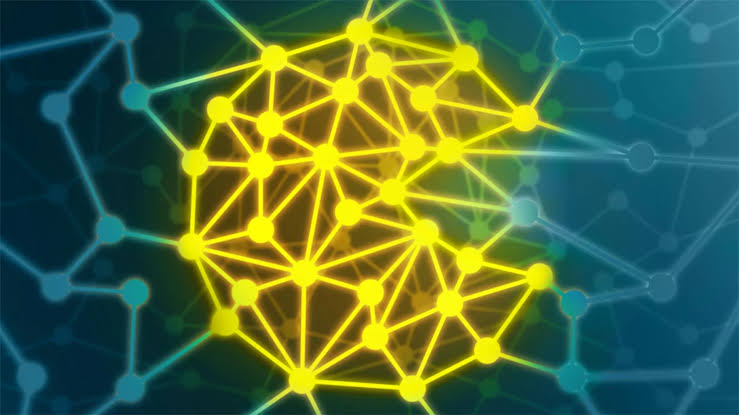
Scientists at the U.S. Department of Energy's Princeton Plasma Physics Laboratory (PPPL) and Princeton University developed a new AI-driven software framework called PACMAN — short for Prediction And Control using MAchiNe learning — capable of monitoring and adjusting fusion plasma in real time, issuing commands in roughly 20 milliseconds. The system's design and first results are detailed in a new paper published in the journal Nuclear Fusion.
The core problem PACMAN is built to solve is genuinely brutal from an engineering standpoint. Keeping fusion plasma hot, dense, and stable requires constant adjustments to a tokamak's heating systems, magnets, and gas injectors. Even small disturbances — instabilities, in physics terms — can spiral out of control within milliseconds and disrupt the entire fusion reaction. Traditional computer simulations, while useful for planning future experiments, can take days or months to run, making them far too slow to guide anything happening live during an actual test that might only last a few minutes.
"That's great for preparing for the next experiment in a year, but for control we need models that make a decision in the moment," said co-lead author Hiro Farre Kaga, a graduate student in the Princeton Program in Plasma Physics, a joint effort between Princeton University and PPPL.
The framework was successfully tested across five separate experiments at the DIII-D National Fusion Facility in San Diego. In one of those tests, the system reportedly predicted a damaging plasma instability roughly 200 milliseconds before it actually appeared, and adjusted conditions in time to prevent it from forming entirely — a genuinely striking demonstration given the sheer speed instabilities normally develop at.
Crucially, PACMAN isn't designed to remove humans from the loop entirely. According to co-lead author Andy Rothstein, a Princeton graduate student in Mechanical and Aerospace Engineering, the framework was built specifically to let multiple machine learning models communicate and share outputs within one integrated system — while people remain firmly in charge of setting the system's actual objectives and hardware safety limits, regardless of what the AI recommends. As Rothstein put it, "a really focused human operator can respond on the order of seconds" — a timescale that simply isn't fast enough for the physics involved.
Egemen Kolemen, an associate professor at Princeton University and PPPL who oversaw the research, noted the framework's modular design means new AI algorithms can be added, swapped out, or run simultaneously without needing to rework the rest of the system — a flexibility the team believes could eventually let PACMAN be adapted across different tokamak designs and sizes, potentially giving the wider fusion research community a shared, common control platform rather than each facility building its own system from scratch.
For an energy technology still years away from commercial viability, results like this chip away at one of fusion's genuinely hardest engineering problems — not generating the reaction itself, but keeping something hotter than the sun's core stable long enough to actually harness it.
Have a lead on a story? Email us at tips@kanilprwire.com.