Tesla's Big Cybercab Reveal Turned Into a Stock Slide and a Federal Investigation Within 24 Hours
Tesla shares dropped more than 6% after the company's Austin Cybercab launch event left analysts with unanswered questions on pricing and deployment, coinciding with a new NHTSA safety review of the vehicle's self-certification.
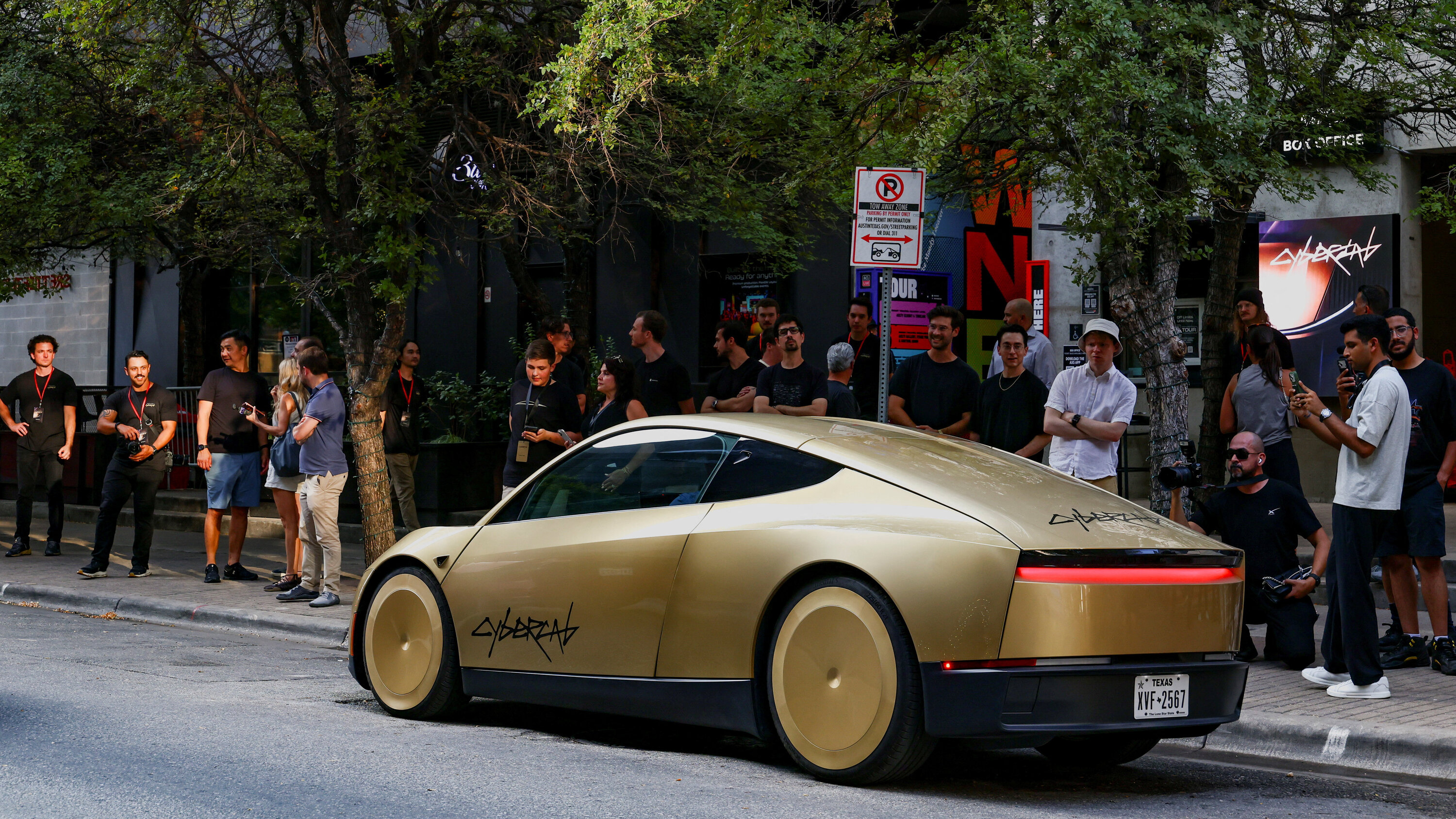
Image Credit : The New York Times
Tesla built up months of anticipation for this event. What it delivered instead was silence, an underwhelmed Wall Street, and a call from federal safety regulators.
Tesla shares fell more than 6% on Friday, marking the stock's worst trading day since July, after the company's much-hyped Cybercab launch event in Austin left analysts with more questions than answers. The decline wiped out virtually all of Thursday's 5.4% pre-event gain, when investor anticipation had been running high.
The event itself was unusually low-key for a company known for theatrical product reveals. Thursday's gathering in downtown Austin was invite-only, wasn't livestreamed, and CEO Elon Musk never made an appearance — a genuine departure from Tesla's typical playbook. Attendees got to see and ride in the purpose-built, two-seat Cybercab, a gold-toned vehicle with butterfly doors and notably no steering wheel or pedals, now being folded into Tesla's existing Austin robotaxi service within a limited "geofenced" area.
Wall Street's reaction was blunt. Wells Fargo analysts titled their note simply "TSLA Cybercab Launch Event Underwhelms," flagging that Tesla's Austin robotaxi service is already facing "early execution issues" — including user complaints about routing errors, skipped destinations, and unusually long wait or ride times. RBC Capital Markets, while maintaining a buy rating on the stock, noted the event offered "limited new incremental disclosure relative to prior announcements," with core questions around pricing, production timelines, and regulatory status still unresolved. RBC specifically called out the missing livestream as a notable break from Tesla's usual style.
Compounding the disappointment, the National Highway Traffic Safety Administration opened what's known as an "audit query" the same day — a review process aimed at determining whether Tesla properly self-certified the Cybercab as meeting federal safety standards for public road use.
The numbers around the actual rollout remain thin. As of Wednesday, Tesla had registered just 45 Cybercabs in Texas, according to Stocktwits data, within a broader Austin robotaxi fleet of roughly 420 vehicles, most of them existing Model Ys rather than the new purpose-built design. That's a stark contrast with Alphabet's Waymo, Tesla's primary robotaxi competitor, which has close to 1,000 registered vehicles and disclosed more than 500,000 fully autonomous rides per week as of Q1 2026, per CEO Sundar Pichai — a scale gap that leaves Tesla's robotaxi ambitions with considerable ground still to cover.
Reaction among Tesla watchers has been genuinely split. Future Fund managing director Gary Black described the event as largely a bust despite the company's efforts to control the narrative, while Deepwater Asset Management's Gene Munster offered a more optimistic read, predicting Tesla could add roughly 300 Cybercabs in Austin over the coming month. Both takes, notably, are built on the same thin set of disclosed details — which is part of why the stock's reaction has been swinging so sharply on incomplete information.
For a stock already down roughly 16-20% year-to-date — currently the weakest performer among the "Magnificent Seven" tech giants — Friday's Cybercab-driven slide adds fresh pressure to a narrative Musk has repeatedly staked the company's future on: that autonomous, driverless vehicles represent Tesla's next major growth chapter. Whether Friday's stumble is a temporary hiccup in a longer rollout or a sign of deeper execution problems is, for now, a question Wall Street remains genuinely divided on.
Know something we don't? Tip us at tips@kanilprwire.com.