Alibaba Just Unveiled "China's Most Powerful AI Chip" — And a Plan to Train a Model 40 Times Bigger Than GPT-4
Alibaba unveiled its Zhenwu V900 AI chip and plans to expand global data center capacity to 20 gigawatts by 2032, alongside ambitions to train a new AI model with up to 10 trillion parameters, sending shares up as much as 5% in Hong Kong trading.
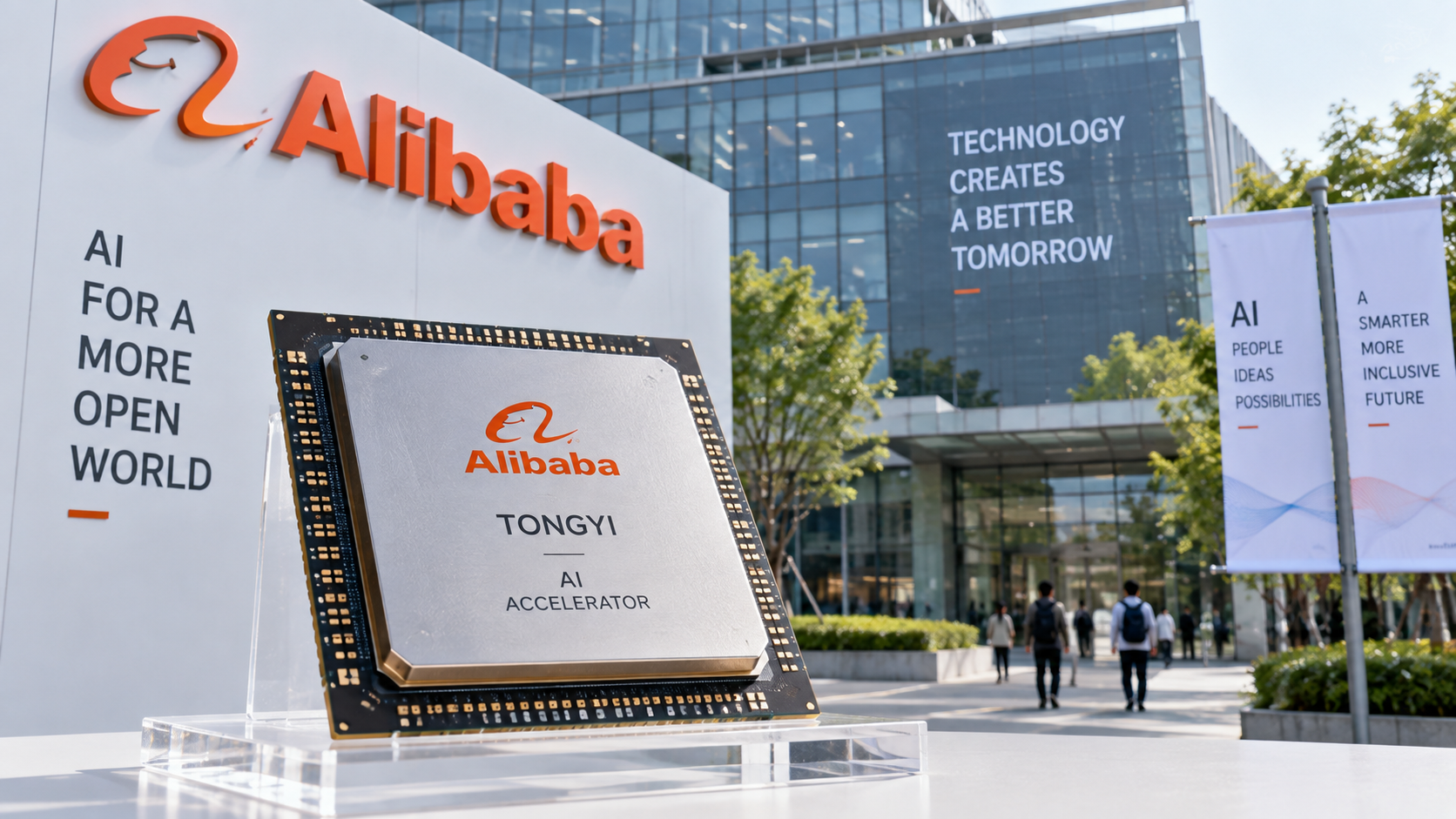
Alibaba spent Tuesday laying out an AI ambition that's hard to overstate: a chip built to rival Nvidia, a data center buildout measured in gigawatts, and a model with parameters numbering in the trillions.
Speaking at Alibaba Cloud's annual flagship Apsara Conference in Hangzhou, CEO Eddie Wu unveiled the Zhenwu V900, a new AI accelerator chip the company says delivers three times the performance of its predecessor, the Zhenwu M890, which only launched in May. Built by Alibaba's in-house T-Head chip division, the V900 can be combined in clusters of up to 500,000 units to power frontier AI model training — positioning it as a genuine domestic alternative to Nvidia's hardware amid ongoing export restrictions limiting Chinese access to top-tier American chips.
The chip announcement was paired with an even more ambitious infrastructure target: Alibaba plans to expand its global Alibaba Cloud data center capacity to more than 20 gigawatts by 2032, citing what Wu described as "exponentially rising demand" for AI computing power. T-Head has already delivered 560,000 units of the broader Zhenwu chip family, with more than 650 customers across industries including automotive, finance, energy, and manufacturing currently using the existing lineup.
Wu also revealed the company's next major model ambition: training a new AI system with somewhere between 5 trillion and 10 trillion parameters — a scale that, if achieved, would dwarf most publicly known frontier models by a wide margin. He framed the moment in sweeping historical terms, comparing current AI development to the early days of electrification, and suggesting that "machine intelligence" could ultimately outgrow human thinking capacity, with AI-assisted programming representing, in his words, just "a light bulb in the era of machine intelligence."
The financial commitment behind this push is substantial. Alibaba has pledged more than $53 billion in AI infrastructure spending over a three-year period, and raised roughly $10.2 billion through a follow-on share offering in Hong Kong just last month. Markets responded enthusiastically to Tuesday's announcements — Alibaba shares jumped as much as 5% in Hong Kong trading, with the broader rally in AI-linked stocks also lifting Tencent and other regional tech names.
Wu was candid about one persistent constraint even amid the ambitious targets: global shortages across the AI data center supply chain, he said, "are currently limiting the speed at which we can scale our compute infrastructure" — an acknowledgment that hardware availability, not just corporate ambition, remains a genuine bottleneck across the industry, in China as much as anywhere else.
The Zhenwu V900 is scheduled for mass production and commercial release in the first quarter of 2027, giving the broader tech industry roughly six months to see whether Alibaba's latest chip can deliver on performance claims at genuine scale — and whether China's homegrown AI hardware ecosystem can meaningfully close the gap with Nvidia's continued global dominance in the meantime.
Know something we don't? Tip us at tips@kanilprwire.com.