Bentley Built an Electric Car That Plays "Music" Instead of Faking Engine Noise
Bentley's first-ever electric vehicle, the Torcal, targets 370 miles of range and roughly 850 horsepower, replacing traditional engine sound with a custom "Dynamic Symphony" built from real musical instruments ahead of its September 23 unveiling.
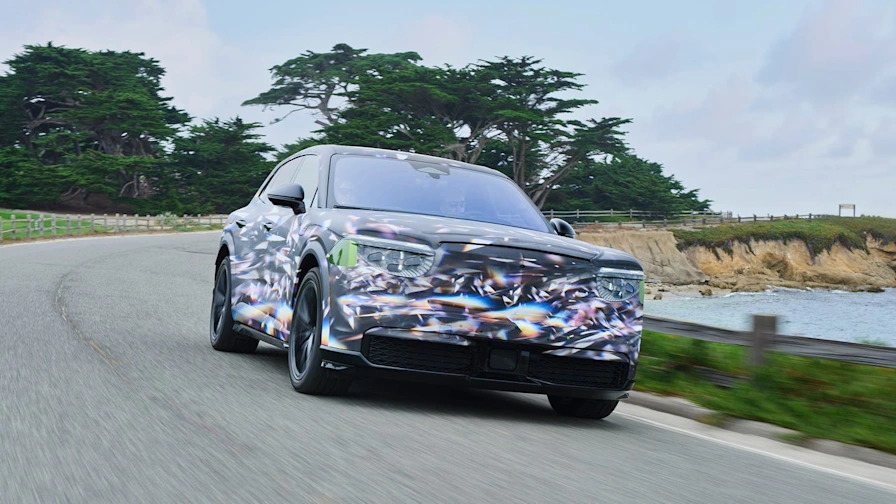
Image Source : Yahoo
For 107 years, a Bentley has always announced itself with sound — the deep growl of a W12, the thunder of a supercharged straight-six from the 1930s. Now the company is trying to keep that identity alive without burning a drop of fuel.
The Bentley Torcal, the British marque's first fully electric model, is set for its official unveiling on September 23, and early rides in prototype versions have started revealing what Bentley's electric future will actually feel like. Autocar, Carscoops, Jalopnik, and The Drive have all now ridden in camouflaged test vehicles, painting a fairly consistent early picture of the car.
The numbers alone put the Torcal firmly in supercar-adjacent territory for an SUV: roughly 850 horsepower from a dual-motor all-wheel-drive setup, built by combining a rear motor borrowed from the Porsche Cayenne Electric with a front motor sourced from the Audi Q6 E-tron — both siblings under the Volkswagen Group's shared PPE electric platform. A 113kWh battery and 800-volt architecture deliver a targeted WLTP range of roughly 370 miles, translating to somewhere around 300 miles under the stricter EPA test cycle typically used in the US.
Charging is genuinely quick by current EV standards — Bentley says the Torcal will handle up to 400kW DC fast charging, capable of taking the battery from 10% to 80% in under 20 minutes, or adding roughly 100 miles of range in about 7 minutes. Bentley's own marketing has already leaned into the obvious use case: enough of a top-up during a coffee stop to make the classic "Paris to St. Tropez" road trip genuinely practical.
The most distinctive detail, though, has nothing to do with horsepower or range. Rather than synthesizing a fake engine growl — the approach several rival EV makers have taken — Bentley built what it's calling the "Bentley Dynamic Symphony," a sound profile created using actual musical instruments rather than simulated engine audio. The idea, according to Bentley, wasn't to replicate the sound of a V8 directly, but to recreate the feeling that sound produces — drawing inspiration from the marque's own engine history, including its early supercharged motors, the long-serving 6.75-liter V8, and the more recent W12.
Bentley director of design Robin Page has been candid that the company isn't chasing headline range numbers with the Torcal. "Our customers are basically telling us that 300-350 miles is that sweet spot," he told Autocar, positioning the car's real-world usability above outright specs.
Pricing is expected to start around £170,000 — sitting roughly between premium electric SUVs like the BMW iX and Volvo EX90, and full-blown ultra-luxury EVs like the Rolls-Royce Spectre. Its most direct rival will likely be the new electric Range Rover.
Early impressions from those who've ridden in the prototype are mixed but generally positive. Autocar described the ride comfort as genuinely matching Bentley's traditional standard, while Edmunds noted the character felt "Porsche-like" on first impression — perhaps unsurprising given the shared underpinnings — while stopping short of calling it distinctly, unmistakably Bentley just yet. Whether the finished product closes that gap remains to be seen when the full reveal happens next month.
For a brand built almost entirely on the theater of a big, characterful engine, the Torcal represents Bentley's biggest bet yet: that luxury and emotional engagement can survive the transition to electric power, even without a single drop of petrol involved.
Got a tip or breaking story for us? Reach out at tips@kanilprwire.com.
This article was written with the assistance of Artificial Intelligence (AI) tools. While our editorial team reviews all AI-assisted content for accuracy and quality, readers are advised to verify critical information from primary sources. The views and information presented are for informational purposes only.