BYD Opens Milan Design Studio, Takes Aim at Audi and BMW on Their Own Turf
Design chief Wolfgang Egger, once at Audi and Lamborghini, now leads a Milan-based studio built to give Denza a genuine shot at Europe's premium market.
BYD isn't hiding its ambitions anymore.
The Chinese automotive giant has quietly built up a dedicated design facility in Milan, and the man running it has a resume that reads like a hit list for German luxury carmakers. Wolfgang Egger — who previously led design at Audi, Lamborghini, and Alfa Romeo — is now steering BYD's push into Europe, and he's doing it from inside the neighbourhood his old employers call home.
The studio's job is straightforward on paper but ambitious in practice: shape every BYD vehicle, and especially those under the premium Denza badge, around what European buyers actually want. Not what sells in Shenzhen. What sells in Stuttgart.
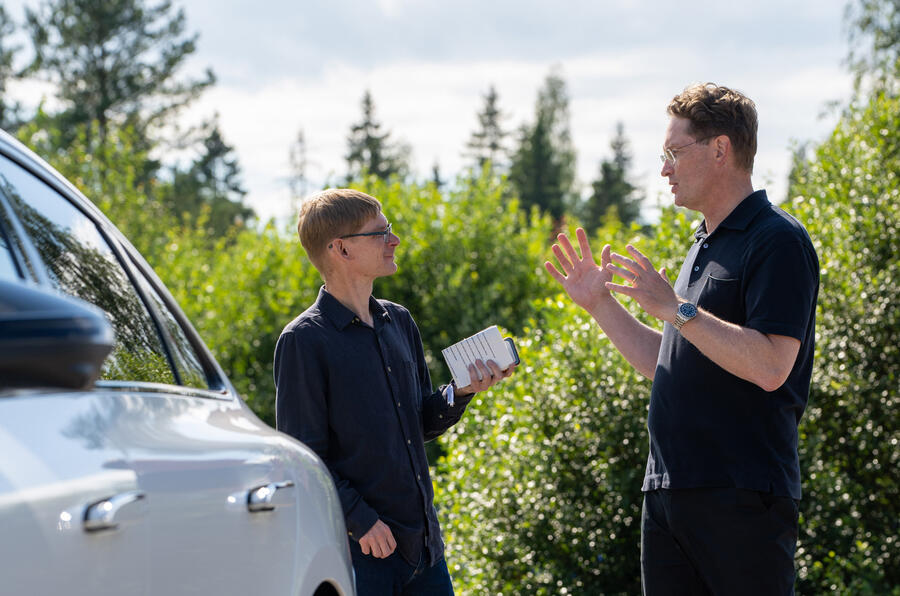
Speaking to Autocar this week, Egger described the Milan base as a place built purely for design research — reading European tastes, tracking where trends are heading, then translating all of that into concepts for Denza and the wider BYD lineup.
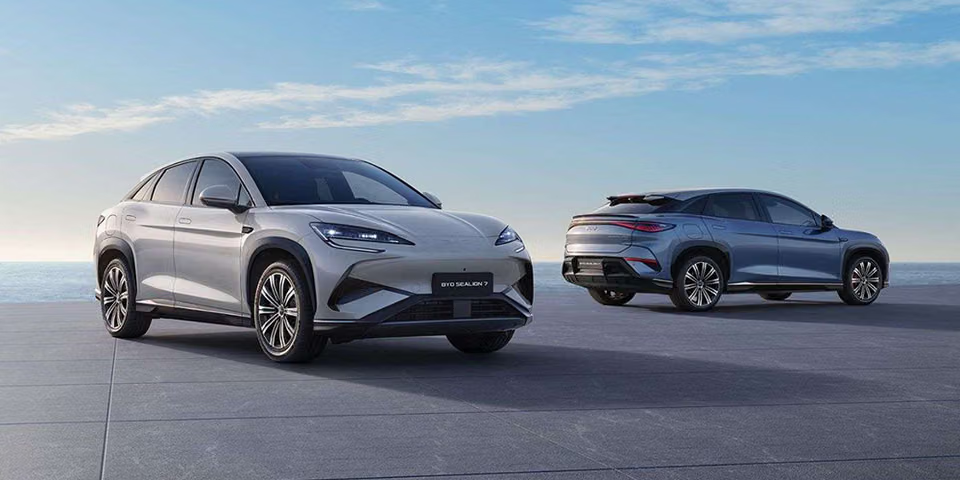
It's a bigger deal than it might first sound. Denza is the first high-volume Chinese premium brand to attempt a real foothold in Europe, and it's not tiptoeing in. Its opening salvo was the Z9 GT, a car priced around £100,000 and pitched squarely at the Porsche Panamera. That's since been joined by the Z, an electric coupe north of £150,000, aimed at buyers who might otherwise be cross-shopping a 911 Turbo.
Convincing someone to walk away from a Mercedes-Benz or a BMW they've driven for a decade is another matter entirely. Loyalty in that segment runs deep, and Egger knows it better than most — six years running design for the entire Audi Group, Lamborghini included, will do that. But he sounded unbothered by the scale of the challenge. BYD's read on the situation is that raw innovation can do the convincing that brand history can't, at least not yet.
Why Milan specifically? Two reasons, really. One is proximity — being close to the fashion houses that dictate what "premium" even looks like this decade gives Egger's team direct access to material and trend conversations most car brands only get secondhand. Denza's European debut actually happened at Milan Design Week last year, alongside exhibitors like Prada and Gucci, so the connection isn't new.
The other reason is more practical. Italy remains a genuine hub for high-end automotive materials — leather sourcing, yes, but increasingly recycled and next-generation materials too. Egger pointed to the Z9's bamboo door cards as an early example of the kind of material experimentation the new studio will keep pushing on.
There's also a retail angle. The Milan facility is expected to double as a customer-facing "atelier" space, letting prospective buyers handle materials and personalisation options in person — the kind of experience usually reserved for brands like Bentley or Aston Martin, not a Chinese newcomer barely two years into its European run.
What's coming next gives some sense of how serious this is. The Bao 5 — already sold in China as the Fangchengbao 5, and built to go head-to-head with the Land Rover Defender — is lined up as Denza's next European launch. Beyond that, BYD is reportedly eyeing the larger N8 and N9 SUVs, the D8 off-roader, and the Z9S saloon for export, each a candidate for whatever tweaks the Milan team decides Europe needs.
Egger, for what it's worth, doesn't do many interviews with European press. He used part of this rare conversation to reflect on the jump from designing halo cars like the Alfa Romeo 8C to now overseeing a 1,200-person team responsible for far more accessible models. His advice, borrowed from former mentor Walter de Silva: don't fall in love with your own designs, or you lose the distance needed to see them clearly.
Whether that philosophy translates into cars European buyers actually cross-shop against an A6 or a 5 Series remains to be seen. But BYD clearly isn't waiting around to find out.