Jaipur Just Hosted a First-of-Its-Kind BRICS Tourism Summit — And a New Travel Pact Came Out of It
India hosted the first-ever BRICS Tourism Ministers' Meeting in Jaipur, resulting in the Jaipur Declaration — a new framework covering AI, sustainable travel, and easier cross-border tourism among member nations.
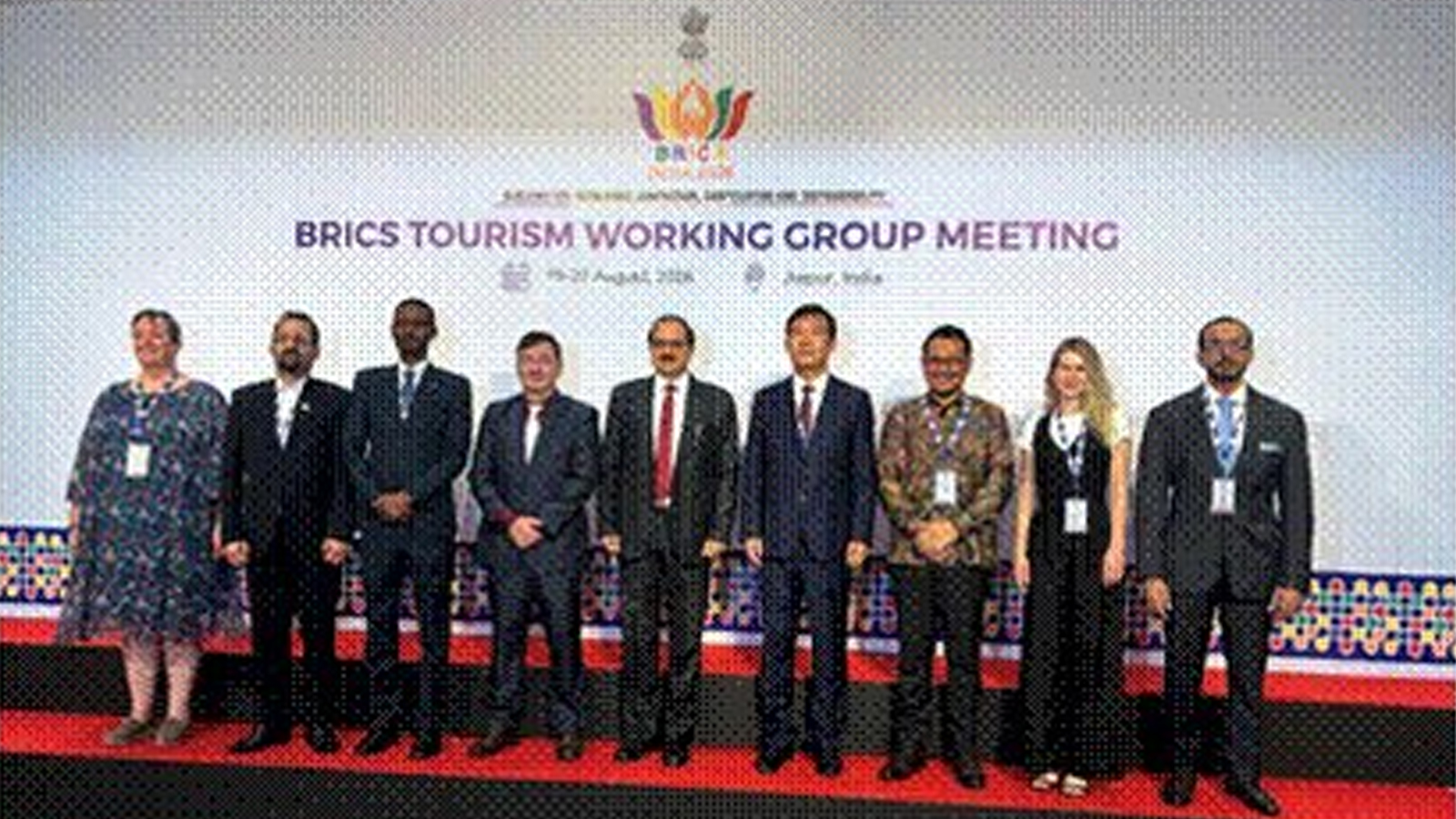
Image Source : DD India
Pink City just wrapped up a genuinely historic few days.
The BRICS Tourism Ministers' Meeting concluded in Jaipur on Friday with the adoption of what's being called the Jaipur Declaration — the BRICS Tourism Ministers' Communiqué 2026 — a framework aimed at deepening tourism cooperation among the bloc's member nations. It marks the first time BRICS has held a dedicated ministerial-level tourism meeting, and it happened on Indian soil, under India's 2026 BRICS chairship.
Union Minister for Culture and Tourism Gajendra Singh Shekhawat chaired the proceedings, describing the tourism track's guiding theme as "Building for Resilience, Innovation, Cooperation, and Sustainability." Heads of delegation from China, Ethiopia, Indonesia, Russia, and South Africa were all in attendance, alongside senior Indian officials including Tourism Secretary Bhuvnesh Kumar.
The meeting itself was the culmination of a longer process. It followed a two-day BRICS Tourism Working Group session held August 19-20, also in Jaipur, where delegates hammered out the substance of what would eventually become the formal declaration. That working group focused on four core priorities: artificial intelligence's role in tourism, sustainable and responsible travel practices, skill and capacity building across the tourism sector, and making cross-border travel between BRICS nations genuinely simpler.
That last point matters more than it might initially sound. For everyday travelers, the practical goal is straightforward — fewer visa headaches, better digital connectivity, and smoother processes when moving between member countries. Whether that translates into visible change for tourists anytime soon remains to be seen, but it's now formally part of the bloc's shared agenda.
On the sidelines of the main event, India also held separate bilateral discussions with Brazil, Iran, South Africa, and the United Arab Emirates — using the gathering as a chance to advance individual tourism partnerships beyond the broader BRICS framework. South Africa's Tourism Minister Patricia de Lille was among the notable attendees, her visit specifically aimed at strengthening bilateral tourism ties and exploring visa facilitation between the two countries.
Beyond the policy discussions, Jaipur itself played a starring role. Delegates were treated to a cultural showcase featuring Rajasthani folk performances and Indian classical dance on the meeting's opening evening, and the program included scheduled visits to some of the city's most iconic heritage sites — Hawa Mahal, City Palace, and Amber Fort — offering international delegates a firsthand look at the kind of heritage tourism India is hoping to spotlight globally.
Shekhawat summed up the broader philosophy behind hosting the event this way: for India, tourism isn't simply about monuments and sightseeing — it's a vehicle for showcasing the country's culture, traditions, and diversity on a global stage.
Whether the Jaipur Declaration translates into concrete, on-the-ground changes for travelers — easier visas, smoother connectivity, shared AI tools for tourism — will likely take months or years to fully play out. But for now, it stands as a formal starting point, and a first for BRICS as a bloc.
Got a tip or breaking story for us? Reach out at tips@kanilprwire.com.