

Minnesota's Top Court Weighs Whether State Agencies Can Sue to Protect a 7,000-Year-Old Sacred Site
Minnesota's Supreme Court is weighing whether state agencies have legal standing to challenge a county's approval of quarry expansion near a 7,000-year-old Indigenous site without a full environmental review.
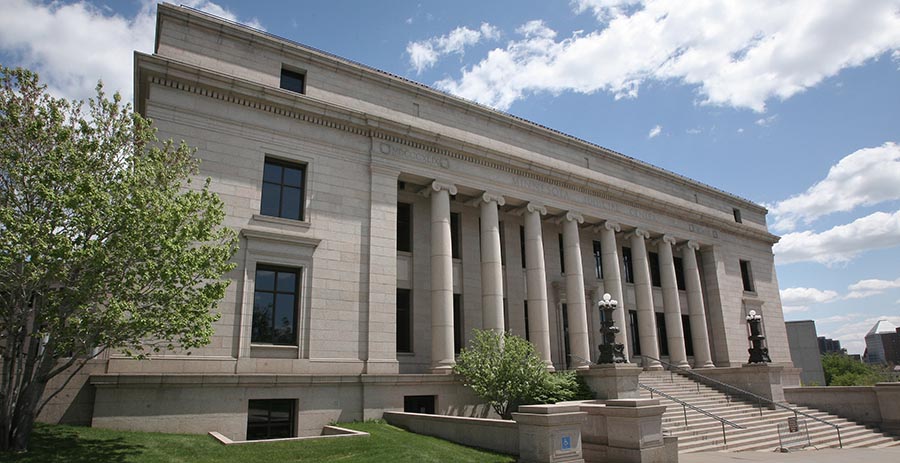
Image Source: minnlawyer.com
A quarry that's operated for decades in rural Minnesota has become the center of a legal question that could reshape how much power state agencies have over local land-use decisions.
The Minnesota Supreme Court heard oral arguments Wednesday in a case testing whether state environmental and historic preservation agencies have legal standing to challenge a county's decision to skip a full environmental review before allowing a mining company to expand operations near a 7,000-year-old Indigenous site.
At the center of the dispute is the Sioux Rock Quarry in Cottonwood County, southern Minnesota, where mining operations have run for decades. The core disagreement is fairly narrow but consequential: Cottonwood County approved permits for the quarry's operator without requiring a full environmental impact statement, and state agencies argue that decision leaves them without the information they need to understand — and mitigate — the mine's effects on a nearby historically and culturally significant site.
The mining company's position is that this is fundamentally a local matter. County governments, the company argues, control land-use permitting decisions, and state agencies can't demonstrate a direct, concrete injury simply from the absence of an environmental impact statement — a legal threshold generally required before a party can bring a lawsuit at all.
State attorneys pushed back on that framing during arguments. According to reporting from Courthouse News, one attorney representing the state's position, Pulitzer, argued the injury is straightforward: without understanding factors like how dust disperses from the site, it's genuinely impossible for state agencies to assess the project's full impact or determine what protective measures the historic site actually needs.
The justices appeared largely sympathetic to the state's argument during Wednesday's session, though they also flagged a broader concern worth noting — a ruling favoring the state agencies could have ripple effects well beyond this single case, potentially making it easier for various government bodies to sue one another over permitting disputes more generally, rather than resolving disagreements through the kind of interagency cooperation Pulitzer noted usually prevents this level of litigation in the first place.
Arguments also touched on a second, related legal question: whether Minnesota's State Historic Preservation Office specifically has independent legal authority to challenge decisions like Cottonwood County's, separate from the broader environmental agency's standing claim.
No ruling has been issued yet. Given the case's implications for how state and local governments interact on environmental and preservation matters statewide, a decision — whichever direction it goes — is likely to be closely watched by land-use attorneys, tribal nations, and local governments well beyond Cottonwood County itself.
Have a lead on a story? Email us at tips@kanilprwire.com.