Hyundai Wants to Build Trucks in America — Then Sell Them to the Rest of the World
Hyundai CEO Jose Muñoz confirmed plans to build body-on-frame trucks and SUVs in the US for both domestic sale and global export, as part of a broader push for 35% sales growth through 2030.
For a company that built its US reputation almost entirely on sedans and crossovers, Hyundai is about to try something it's never really attempted before.
CEO Jose Muñoz confirmed at the company's 2026 CEO Investor Day in Seoul that Hyundai plans to expand well beyond the Boulder and Crater concept vehicles it's already shown off, building a broader family of body-on-frame SUVs and pickup trucks — the traditional ladder-frame construction used by rivals like the Toyota Tacoma and Ford Ranger. It's a segment Hyundai has largely sat out of in North America, building its brand instead on unibody crossovers and passenger cars.
The strategic logic goes further than simply catching up to competitors, though. Muñoz specifically floated the idea of building these new trucks in the United States and exporting them globally — a reversal of the usual pattern, where American-market trucks rarely find buyers overseas. "Definitely the United States could be not only the place to produce for domestic but also for export," Muñoz said, "as we see definitely other regions benefiting from these new segments. We're working on the economics, the sourcing, on which markets could be part of that expansion."
The body-on-frame push is one piece of a considerably larger target: Hyundai is aiming for a 35% increase in global sales through 2030, alongside a 6% global market share target for the combined Hyundai and Genesis brands. The company says it plans to launch or refresh more than 100 vehicles worldwide by that same year, spanning EVs, hybrids, and extended-range electric options.
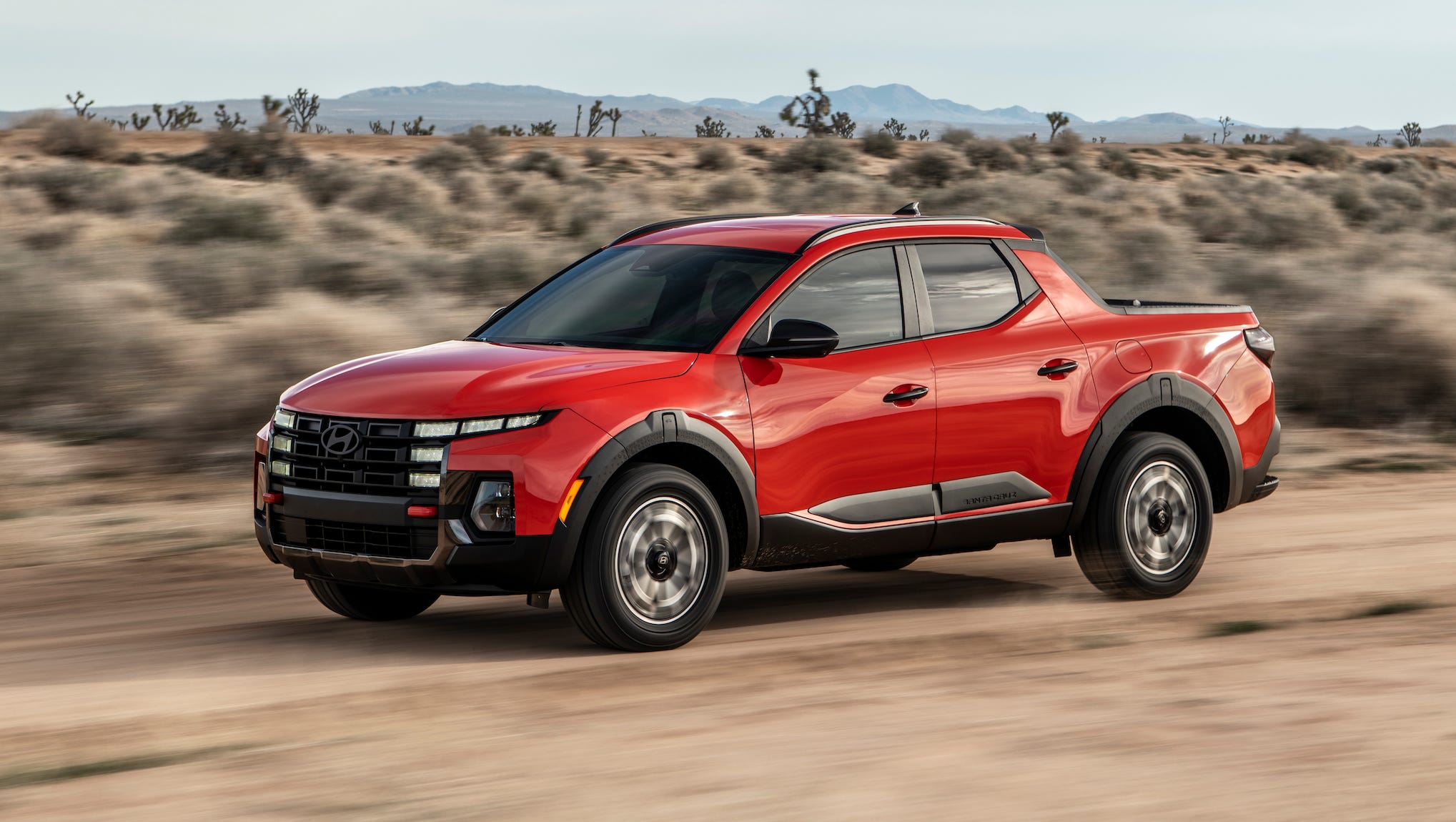
Timing-wise, Hyundai's first North American body-on-frame model — a midsize pickup, still unnamed — is targeted for a 2029 launch. It won't be Hyundai's first attempt at a truck. The company's earlier Santa Cruz, a smaller unibody pickup, was comfortably outsold by the Ford Maverick, its closest direct competitor.
There's a manufacturing angle underpinning all of this, too. Hyundai's massive Metaplant in Ellabell, Georgia — originally built exclusively for EV production — is being retooled for greater flexibility, now capable of handling hybrids alongside EVs, and potentially both unibody and body-on-frame vehicle platforms down the line. Muñoz has previously credited that flexible approach as central to Hyundai's broader strategy: "Our solution to any situation we face in the world is flexibility."
Whether American-built Hyundai trucks genuinely find buyers overseas remains an open question — export-oriented truck strategies have a mixed track record industry-wide. But for a company that's grown faster than any other automaker in the US over the past several years, betting on a segment it's historically avoided entirely says something about how much confidence Hyundai currently has in its own momentum.
Know something we don't? Tip us at tips@kanilprwire.com.