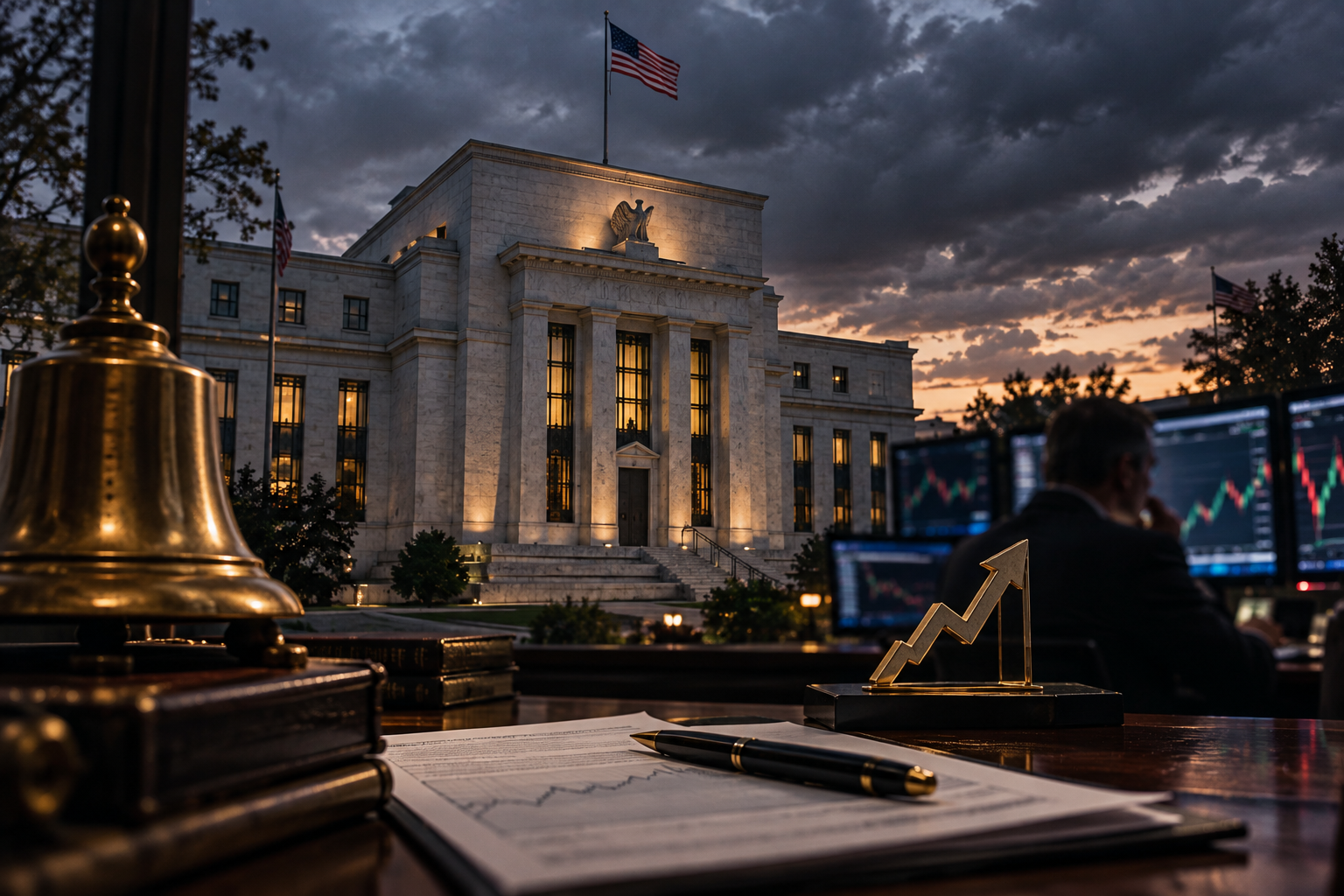
Inflation Won't Budge, and Wall Street Is Suddenly Betting the Fed Hikes Rates Instead of Cutting Them
Fed Chairman Kevin Warsh's Jackson Hole address, paired with inflation holding at 3.7% annually, has pushed market expectations toward a possible September rate hike rather than the rate cuts investors had previously anticipated.
For months, the conversation around the Federal Reserve centered on when rate cuts might arrive. This week, that conversation flipped almost entirely.
Federal Reserve Chairman Kevin Warsh, delivering his first Jackson Hole keynote address as chair, told an annual gathering of central bankers in Wyoming that he wants to see underlying inflation clearly heading lower before considering any policy shift. The data he's working with isn't cooperating. The core Personal Consumption Expenditures price index — the Fed's preferred inflation gauge — rose in line with expectations in July, but the annual rate remained stuck at a stubborn 3.7%, with roughly 54% of the overall consumer basket still rising faster than 3% per year.
Warsh's remarks landed with real market impact. Futures markets moved from pricing in roughly a 35% chance of a September rate hike before his speech to about 57% afterward — a genuinely significant shift in expectations for a single address. Markets responded accordingly: the S&P 500 slipped 0.25% to 7,711.76, the Nasdaq fell 0.52%, the two-year Treasury yield touched its highest level since July at around 4.32%, and gold dropped roughly 3% to near $4,455 an ounce.
Broader economic figures released this week painted a mixed picture. Second-quarter GDP held steady on a headline basis, according to the Bureau of Economic Analysis, with increases in consumer spending, exports, and business investment offset by a decline in government spending. Consumer spending itself, though, showed signs of stalling in more recent data — even as the headline inflation figure ticked up slightly to 3.7% annually, with the core reading matching analyst estimates at 3.3%.
The broader labor market context adds another layer. According to outplacement firm Challenger, Grey & Christmas, job cuts fell sharply this summer — just 33,429 layoffs in July, down 46% from a year earlier and the lowest monthly total in two years. For the first seven months of 2026, job reductions are running 41% below last year's pace. The technology sector, notably, still accounted for nearly 30% of all job cuts during that stretch, underscoring an uneven recovery across sectors even as overall layoff activity cools.
Inflation has remained persistently above the Fed's 2% annual target for an extended stretch now, with the central bank holding rates steady through its most recent policy meeting in July — a decision that passed 9-to-3, with three committee members actually favoring a 25-basis-point increase at that meeting already.
The stakes heading into September are considerable. A cluster of major data releases — ISM manufacturing and services surveys, the JOLTS job openings report, the Fed's Beige Book, and the closely watched September jobs report — all land before the Fed's next policy meeting later that month, giving policymakers a fuller picture before their decision. For now, though, Warsh's Jackson Hole remarks have shifted market expectations meaningfully: instead of debating when rate cuts begin, investors are increasingly pricing in the possibility that the Fed's next move goes the other direction entirely.
Spotted a story we should dig into? Drop us a line at tips@kanilprwire.com.