

One of America's Busiest Ports Will Now Pay Truckers Up to $230,000 to Go Electric
The Port of New York and New Jersey launched a $39 million voucher program offering up to $230,000 per zero-emission Class 8 drayage truck, alongside dedicated funding for nearby charging infrastructure.
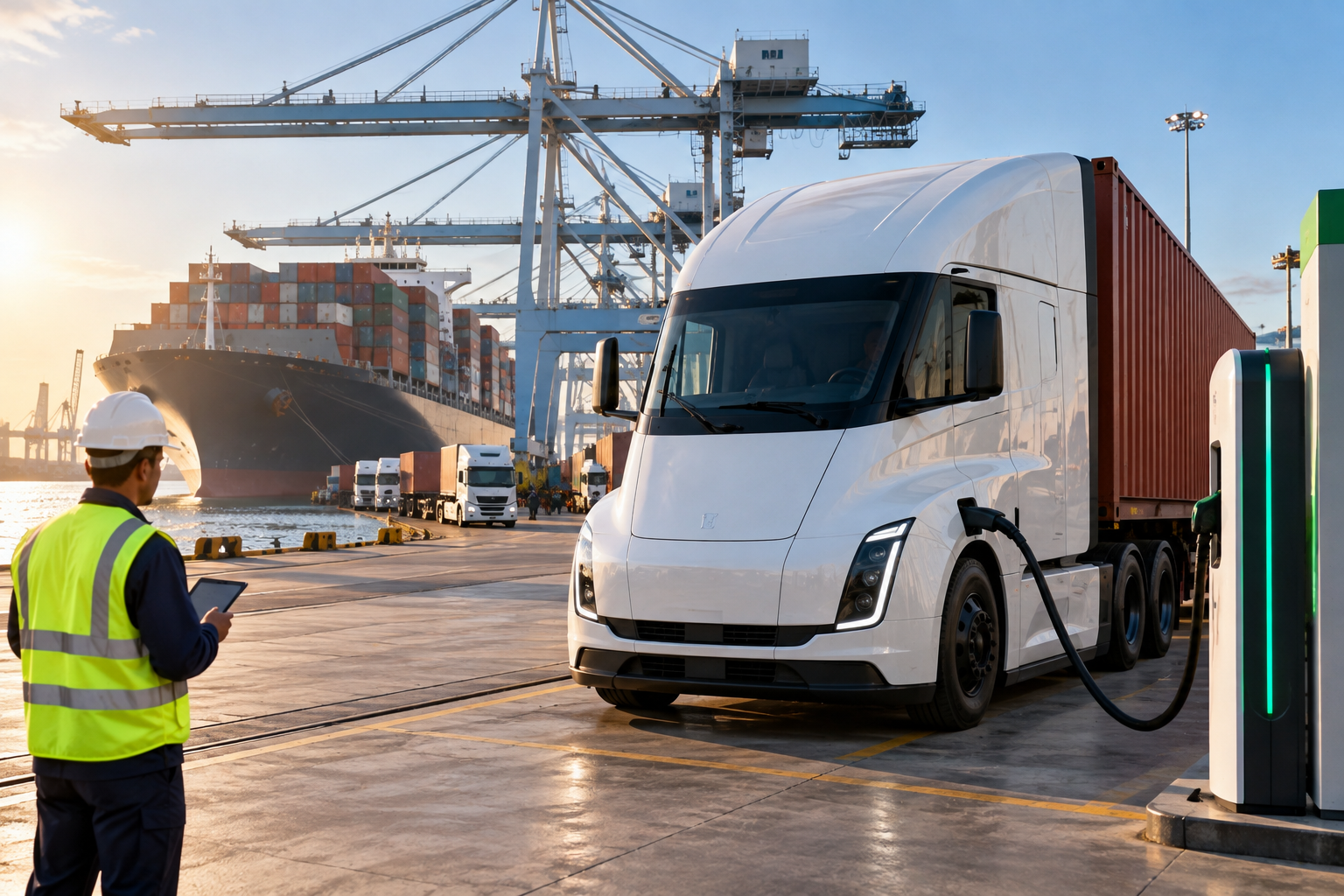
Moving cargo through the Port of New York and New Jersey is about to get a financial nudge toward cleaner trucks.
The Port of New York and New Jersey launched a $39 million zero-emission truck voucher program this week, offering funding to help drayage operators — the truckers who haul containers between ports, rail yards, and warehouses — transition away from diesel. The program covers up to $230,000 toward a new Class 8 zero-emission drayage truck and up to $150,000 for zero-emission terminal tractors, the smaller vehicles used to shuttle containers within port facilities.
The initiative doesn't stop at vehicles, either. A separate $5 million allocation within the program is earmarked specifically for charging infrastructure, targeting hubs located within 10 miles of the port — addressing one of the most common practical barriers operators cite when considering a switch to electric trucks: having somewhere reliable to actually charge them.
The timing lines up with a genuinely demanding stretch for the port. According to the National Retail Federation, September is expected to be the busiest US import month of all 2026, with a forecast of 2.31 million twenty-foot equivalent units (TEUs) — the standard measure for shipping container volume. The broader West Coast picture tells a similar story: the Port of Los Angeles just completed its busiest three-month stretch on record, handling more than 2.9 million TEUs between June and August.
For drayage operators specifically, the economics of switching to electric trucks have historically been a tough sell — higher upfront vehicle costs, charging infrastructure gaps, and tighter operating margins in an already competitive freight market. A voucher covering a meaningful chunk of that upfront cost, paired with dedicated charging investment, directly targets both of those obstacles at once, rather than addressing vehicles or infrastructure in isolation.
Whether the funding proves large enough to meaningfully shift fleet decisions at scale remains to be seen — $39 million spread across a port handling millions of containers annually is a start, not a full transition. But for individual operators weighing their next truck purchase, it's a real financial incentive landing at a moment when import volumes, and the trucks needed to move them, are both climbing.
Have a lead on a story? Email us at tips@kanilprwire.com.